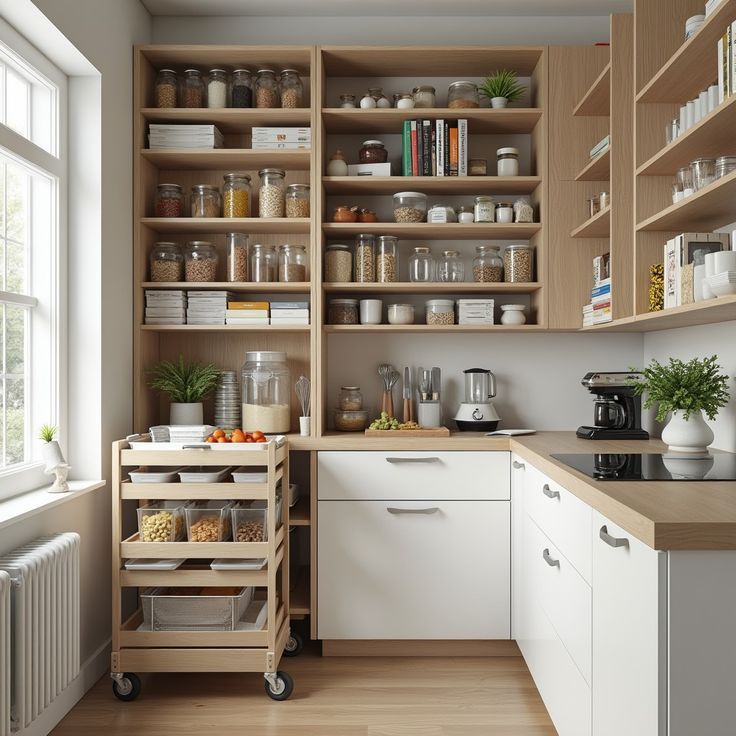
Organization is not about empty shelves—it is about knowing where items live, when to replenish them, and how they connect to your weekly meal map. Our consulting focuses on practical sorting, not perfection. General education only—not medical or dietetic services.
Pantry and planning guidance is informational. For allergen or health-related dietary needs, speak with a qualified Australian health practitioner. Service fees are quoted in writing before purchase.
Example zone layout for educational reference
Spatial logic
Assign zones by frequency, not aesthetics alone
Eye-level shelves carry items you reach for nightly. Higher shelves store occasional baking supplies. Lower drawers hold bulk goods in sealed containers. This hierarchy shortens dinner assembly without requiring a full kitchen remodel.
We document your cupboard dimensions and suggest container sizes that prevent half-used bags from tipping over. Labels use plain language—rice, pasta, snacks—so every household member can maintain the system.
Inventory audit
Start with a truthful snapshot
Step one: gather
Pull forward items from deep shelves. Note duplicates and items approaching use-by dates. Discard only what you are comfortable removing—our role is guidance, not judgment.
Step two: classify
Group by cooking role: bases, proteins, flavour accents, and ready-to-eat snacks. This classification feeds directly into your shopping list template.
Step three: cadence
Set a monthly mini-audit and a quarterly deeper review. Consistency matters more than duration.
Step four: connect
Link each zone to meal slots on your weekly map so nothing sits unused while you shop for duplicates.
Shopping rhythm
Split shops into anchor and top-up trips. Anchor visits cover proteins, grains, and household staples. Top-ups handle produce midweek when markets near Melbourne CBD offer fresh stock.
List design
Lists that mirror your cupboards
Columns follow pantry zones so you move through the store efficiently. A margin column captures seasonal specials without derailing the core plan. We teach you to photograph empty zones instead of memorizing gaps.
Staple rotation prevents over-purchasing oils or spices
Shared digital lists sync with partners or housemates
Budget caps noted per trip to keep spending predictable
Cold storage flow
Upper shelves: ready-to-eat items. Middle: dairy and leftovers in dated containers. Lower: raw ingredients in sealed bins. Door items rotate quickly because temperature fluctuates.
Refrigeration
Make leftovers visible
Clear containers and consistent dating reduce waste. We provide labeling conventions that take seconds but save minutes during busy evenings.
Household alignment
Shared responsibility without conflict
Rotate who owns the weekly map and who verifies pantry gaps. A simple chalkboard or digital board in the kitchen lists tonight’s meal and prep owner. Children can manage snack zones with clear boundaries.
Sunday outline
Agree on four dinners and flexible lunches. Leave two slots open for spontaneous invites.
Wednesday check
Adjust produce purchases based on what was actually eaten.
Programs
Four-week organization challenge
Week 1
Pantry audit and zone sketch.
Week 2
Shopping list rebuild and staple rotation.
Week 3
Fridge flow and leftover visibility.
Week 4
Review, document, and set monthly cadence.
Educational tools included
Workbooks, printable zone labels, and video walkthroughs demonstrate techniques. Materials remain general information—you apply them within your household context.